
Colour
Living with dark colour in a bedroom
How deep greens and browns can calm a room rather than shrink it.

Dark colour has a reputation for making rooms smaller. In a bedroom it often does the opposite. Deep walls blur the corners, so the edges of the room fall away and what is left feels quiet and enclosed in a good way.
Why dark works where you sleep
A bedroom is used mostly in the evening and early morning. It does not need to be bright. It needs to help you slow down, and a deep green, brown or blue does that better than white ever will.

Commit to it
The rooms that fail are the ones with a single dark feature wall. The contrast draws a line around the room and makes it feel boxed in. Take the colour across all four walls, and where the ceiling is low, across the ceiling too.
Paint skirting, doors and frames in the same colour as the walls.
Use a matt finish on walls and a soft sheen on woodwork.
Test the colour on a large board and look at it at night.
A dark room is not about the colour. It is about what the colour lets you stop noticing.
Balance it with texture and light
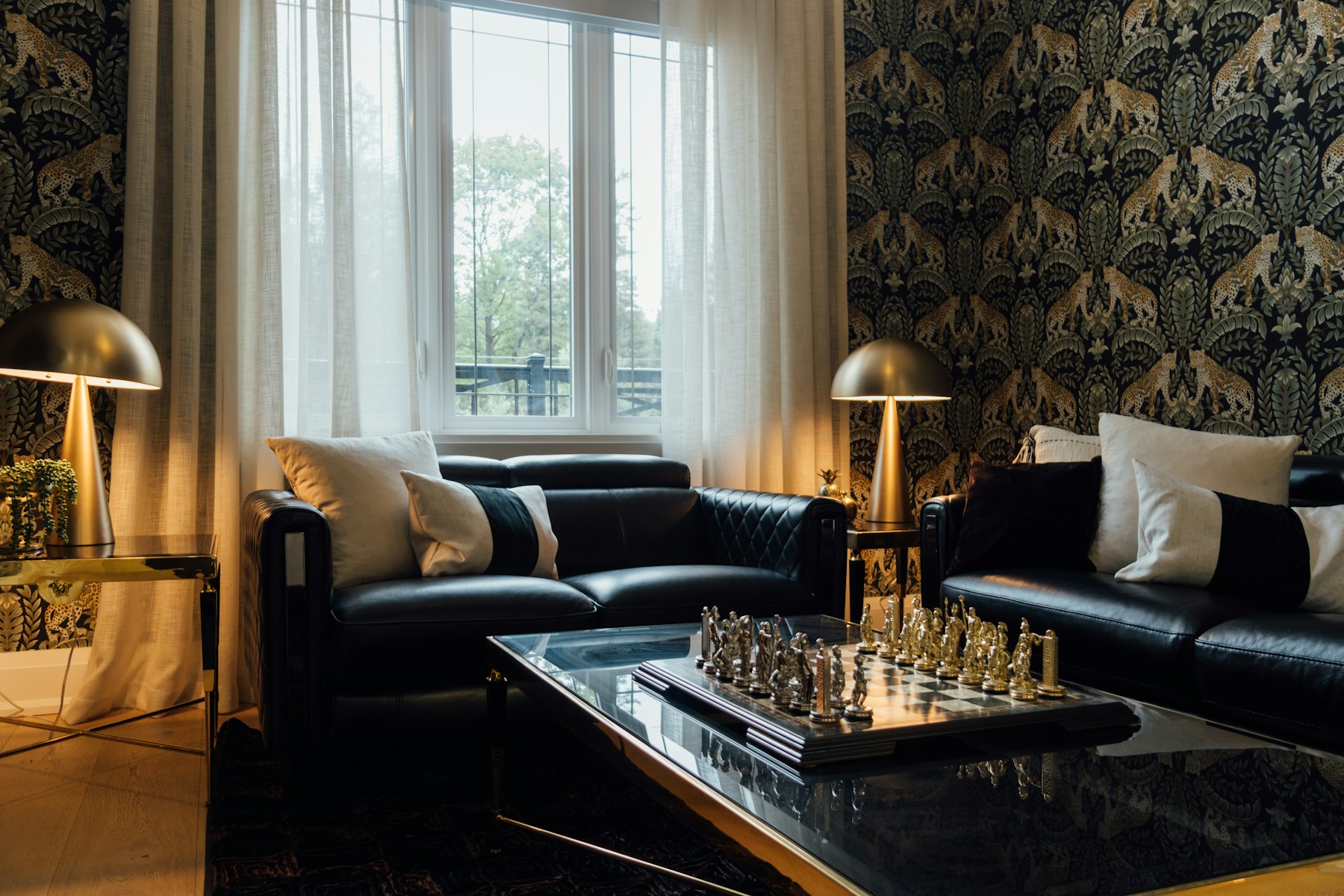
Dark walls need something soft against them. Linen bedding, a wool rug, timber and brass all read more richly against a deep background than they do against white.
Keep the lighting low and warm. Two bedside lamps and one small wall light are enough. Avoid downlights, which turn a dark ceiling into a row of bright holes.
Live with it first
Give the room two weeks before you judge it. The first day always feels like a shock. By the second week most people tell us it is the room they least want to leave.
Related articles


