
Lighting
Layering light in a living room
Why one ceiling fitting is never enough, and how to layer three kinds of light.

Most living rooms are lit by one fitting in the middle of the ceiling. It makes the room bright and flat at the same time. Good lighting does the opposite: it uses less light, placed in more places, at different heights.
Three kinds of light
Every room we design has three layers. Each one does a different job, and each one sits on its own switch or dimmer.
Ambient light: the soft general glow that lets you move around the room.
Task light: focused light for reading, working or cooking.
Accent light: small pools that pick out a painting, a shelf or a texture.
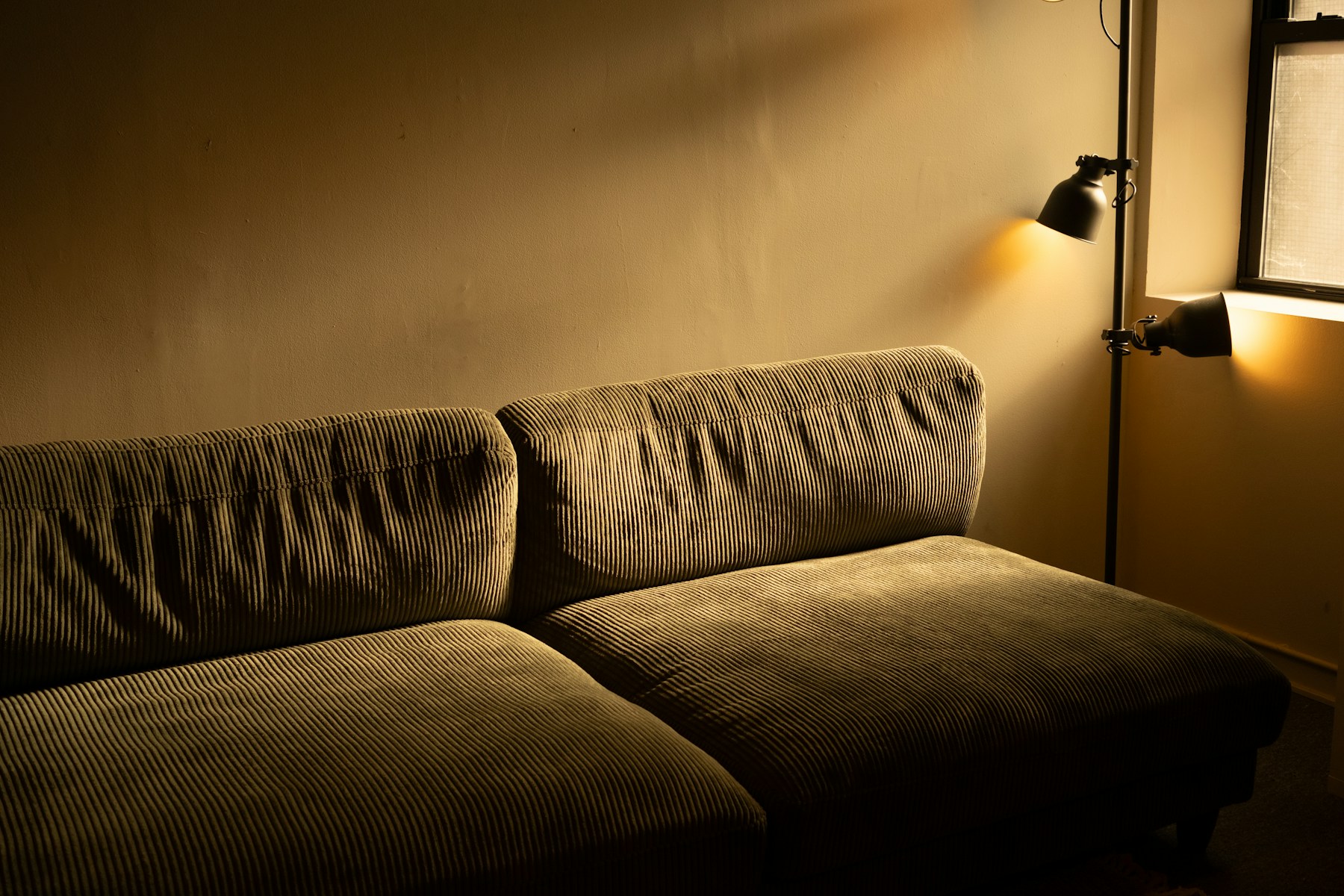
Bring the light down
Light that comes from above flattens faces and furniture. Light at eye level and below makes a room feel warm. Start with table lamps and floor lamps, then add the ceiling light last, if you still need it.
As a rule of thumb, a living room wants at least five light sources. That sounds like a lot until you count them in a room you like.
If you can only change one thing, put every light on a dimmer.
Colour temperature
Keep every bulb in the room the same warmth. For living spaces we use 2700K, which is close to the colour of an old filament lamp. Mixing warm and cool bulbs is the most common reason a room feels uneasy without anyone knowing why.
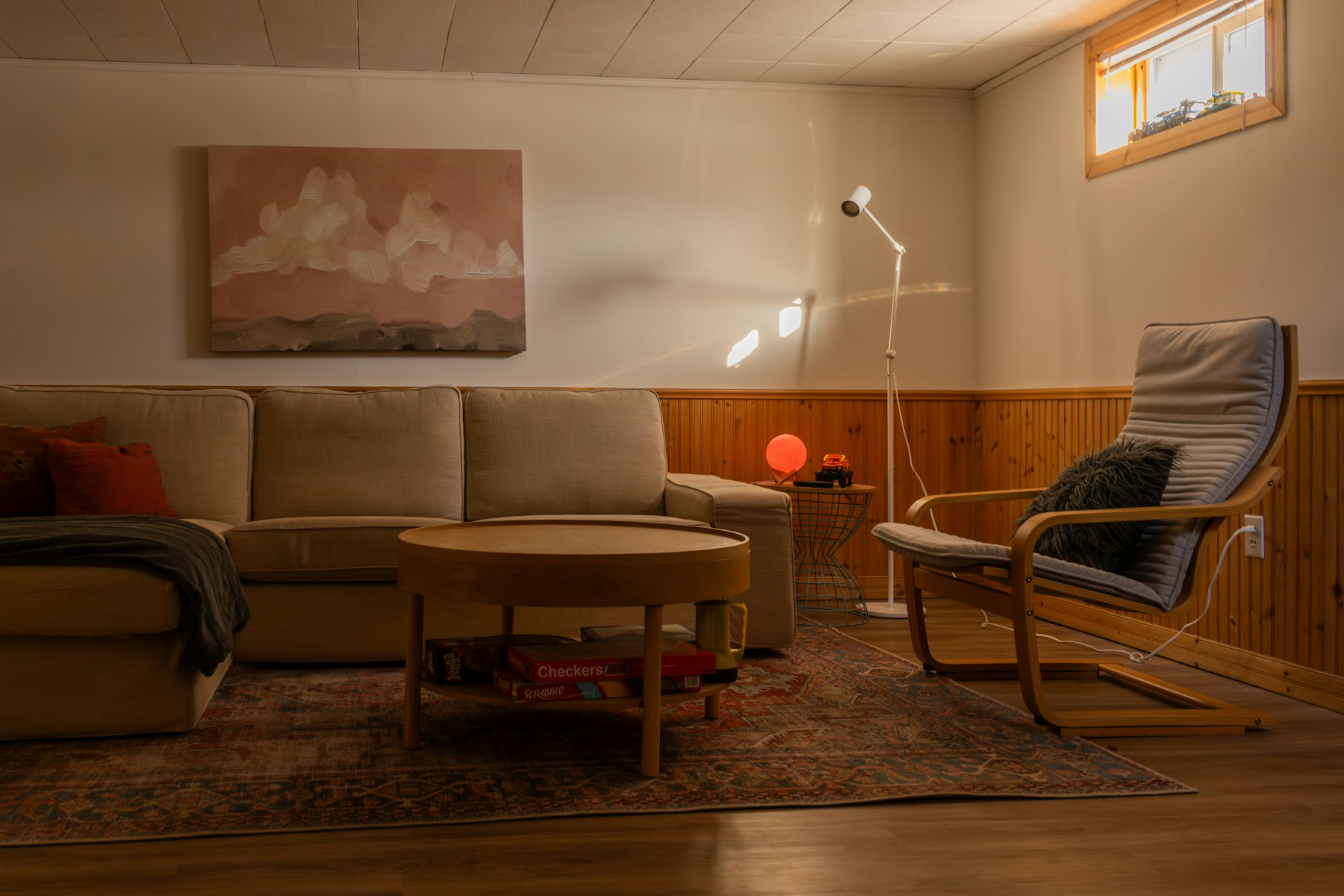
Plan it before the walls are closed
Lighting is cheap to plan and expensive to change. Decide where the sofa, the reading chair and the artwork will go before the electrician arrives, and the sockets and switches will end up where you actually need them.
Related articles


